


Laws on Return of Antiquities
Syllabus: GS1/History/GS2/IR
In News
- U.S. authorities have returned 657 antiquities worth nearly $14 million to India as part of ongoing investigations into international trafficking networks.
Do you know?
- In 2024, India and the United States of America signed the first ever ‘Cultural Property Agreement’ to prevent and curb the illicit trafficking of antiquities from India to the USA.
- The Cultural Property Agreement (CPA) is aligned with the 1970 UNESCO Convention on the means of Prohibiting and Preventing the Illicit Import, Export and Transfer of Ownership of Cultural Property, to which both countries are States party.
What is Antiquity?
- The Antiquities and Art Treasures Act, 1972 (enforced from April 1, 1976) broadly defines “antiquities” as objects of artistic, cultural, historical, or scientific significance, including coins, sculptures, paintings, inscriptions, and other items reflecting past civilizations, provided they are at least 100 years old.
- In the case of manuscripts, records, or other valuable documents of scientific, historical, literary, or aesthetic importance, the minimum age requirement is reduced to 75 years.
International Laws
- The UNESCO 1970 Convention defined cultural property as items of archaeological, historical, artistic, literary, or scientific importance designated by countries.
- It highlighted that illicit trade in such property harms the cultural heritage of source countries and stressed international cooperation as key to protecting it.
Claim Process for Returning Antiquities
- The UNESCO 1970 Convention requires countries to provide evidence (at their own cost) to prove ownership when claiming return of antiquities.
- In India, proving ownership is difficult because many stolen antiquities have no FIR, though scholarly research can sometimes serve as supporting evidence.
- Older cases require bilateral negotiations or international forums
- Later cases can be pursued more directly using proof of ownership and UNESCO mechanisms
Indian laws
- India’s constitutional provisions assign responsibility for heritage across the Union, State, and Concurrent Lists.
- Before Independence, the Antiquities (Export Control) Act of 1947 regulated the export of antiquities, followed by the Ancient Monuments and Archaeological Sites and Remains Act in 1958.
- Concerns over thefts of cultural objects, along with the influence of the UNESCO Convention, led to the enactment of the Antiquities and Art Treasures Act, 1972 (implemented in 1976).
- This law prohibits the export of antiquities without central government permission and requires anyone dealing in them to obtain a licence from the Archaeological Survey of India (ASI).
Source:TH
World Food Programme
Syllabus: GS2/International Organisations
Context
- The World Food Programme is assisting to deliver food and nutrition to the people across South Sudan.
About
- The World Food Programme (WFP) is the food assistance branch of the United Nations and the world’s largest humanitarian organization addressing hunger and food insecurity.
- It was established in 1961 by the UN General Assembly and the Food and Agriculture Organization (FAO).
- WFP has a presence in over 120 countries and territories.
- It is fully funded by voluntary donations.
- Major Functions:
- Provides food during conflicts, natural disasters, and pandemics.
- Nutritional support to pregnant women, children, and vulnerable groups.
- Tackles malnutrition and stunting.
- Provides meals to children to boost attendance and learning outcomes.
- It was awarded the Nobel Peace Prize 2020 for efforts in combating hunger and preventing hunger from being used as a weapon of war.
- Headquarters: Rome
Source: UN
E-PRAAPTI Portal
Syllabus: GS2/Governance
In News
- The Employees’ Provident Fund Organisation (EPFO) is launching a new portal called E-PRAAPTI to help resolve long-pending issues of unclaimed EPF deposits.
About E-PRAAPTI Portal
- It is a dedicated digital platform to facilitate identification, tracking, Unique Account Number (UAN) linking, and activation of old EPF accounts.
- It will use Aadhaar-based authentication to allow users to securely access old EPF accounts, even those not linked to a UAN, and help them update details, link UANs, and activate accounts.
- In its initial phase, access will be based on member IDs, benefiting users who still have those details, and later it will be expanded to those who cannot recall their old IDs.
- It is designed to reduce paperwork and manual intervention while improving transparency and efficiency in handling dormant EPF accounts.
Significance
- The portal is important for resolving about 31.83 lakh inoperative accounts, many of which have remained unused for over 20 years.
- It mainly supports members who retired after the age of 55 or whose accounts became inactive after three years without contributions.
- With features like auto-mode processing and Aadhaar authentication, it strengthens EPFO’s efforts, which already settled a record 8.31 crore claims in FY26.
Source :TH
Changi Naval Base
Syllabus: GS2/IR
Context
- INS Sunayna has arrived at Changi Naval Base in Singapore.
About
- It marked INS Sunayna’s fourth port call under the vision of MAHASAGAR (Mutual and Holistic Advancement for Security and Growth Across Regions).
- The ship, with a multinational crew from 16 Friendly Foreign Countries (FFCs), is deployed to the Indian Ocean Region and has completed port calls at Malé, Phuket, and Jakarta.
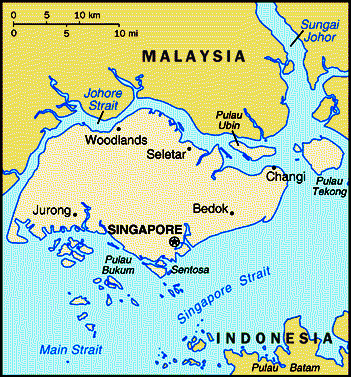
- Changi Naval Base (CNB) is a major naval installation of the Republic of Singapore Navy located at the eastern tip of Singapore, near Changi Airport.
- The base can accommodate large warships, including aircraft carriers and amphibious vessels.
- It is located near the Strait of Malacca, which is one of the busiest sea lanes in the world.
- It enables Singapore to safeguard Sea Lines of Communication (SLOCs).
Source: PIB
Doppler Weather Radar Network
Syllabus: GS3/ Disaster Management
Context
- India has expanded its Doppler Weather Radar network since 2014, increasing from 14 operational units to 50, marking over 250 percent rise.
Doppler Weather Radar Network
- A Doppler Weather Radar (DWR) network is a system of multiple radar stations working together to monitor weather over a large area.
- Operated by the India Meteorological Department (IMD), this network uses advanced S-band, C-band, and X-band radars to provide real-time, high-accuracy data, improving nowcast detection to 91%.
- Applications:
- Weather Forecasting: It tracks formation and movement of clouds and storms, helps predict rainfall, cyclones, and thunderstorms.
- Early Warning Systems: Detects severe weather events like Cyclones, Tornadoes and Lightning and cloudbursts.
- Agriculture Support: Provides agro-meteorological advisories to farmers.
How Does It Work?
- The Doppler Weather radar network is based on the Doppler Effect, discovered by Christian Doppler, which explains the change in frequency of waves due to motion.
- The radar emits microwave signals into the atmosphere. These signals bounce back (echo) after hitting objects like raindrops, clouds, or dust.
- By analyzing the change in frequency of the returned signal the speed of particles and direction of movement is identified.
- The dual-polarisation radars can accurately distinguish between rain, hail, and drizzle, improving rainfall estimation and reducing false alarms.
Source: AIR
Underground Coal Gasification (UCG)
Syllabus: GS3/Environment /Economy
In News
- The Ministry of Coal has signed Coal Mine Development and Production Agreements (CMDPAs) for four coal mines under the 14th commercial coal auction round, introducing Underground Coal Gasification (UCG) provisions for the first time in India.
Underground Coal Gasification (UCG)
- Underground Coal Gasification (UCG) is a new technology that converts coal into synthetic gas directly within the coal seam, without traditional mining.
- It allows use of deep, thin, or otherwise unmineable coal reserves, expanding India’s usable energy resources.
Importance
- UCG supports cleaner and more efficient energy production alongside conventional coal extraction.
- The syngas can be used for producing fertilizers (like urea and ammonia), as well as methanol, dimethyl ether, and synthetic fuels, potentially reducing imports.
Coal Mine/Block Development and Production Agreement (CMDPA/CBDPA)
- It sets a milestone-based system for commercial coal mine allottees, linking performance security to project timelines to ensure timely development and operation.
- To encourage early production, it offers a 50% incentive on revenue share and allows return of the Performance Bank Guarantee (PBG) if the block becomes operational on time.
National Coal Gasification Mission
- The Government has launched the National Coal Gasification Mission with a target of achieving 100 million tonnes of coal gasification by 2030.
- To support this, an ₹8,500 crore incentive scheme has been introduced for both public and private sector projects, alongside major ongoing investments worth over ₹64,000 crore.
- The initiative also promotes advanced methods like Underground Coal Gasification (UCG) to utilize difficult-to-access coal reserves while reducing environmental impact.
Source :PIB
Previous article
Project to strengthen Grassroots Biodiversity Governance
Next article
Komagata Maru Incident
